"L'UMBRIA da visitare e gustare"
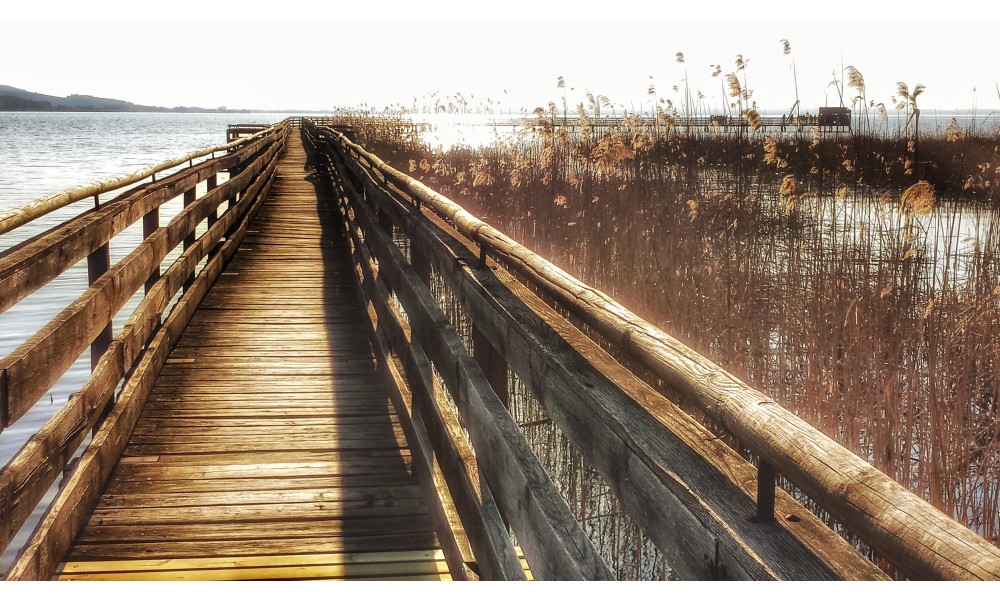
Trasimeno Lake - The blue heart of Umbria
On the border with Tuscany, nestled between the hills, between the reeds and the enchanting white water lily, lies Lake Trasimeno, a true natural paradise where wild ducks, cormorants, kites and kingfisher flock. In addition to the flat slope, hills with woods alternating with fields of sunflowers and corn, vineyards and expanses of olive trees frame the hills. Here agriculture is practiced very much and in a traditional way.
The municipalities of Trasimeno are Castiglion del Lago, Magione, Panicale, Passignano, Tuoro, Città della Pieve, Paciano and Piegaro: some overlook the lake, others are just a short distance away but are affected by the charm and attractiveness of this body of water. a tip: everyone is worth a visit if you come to Umbria!
With its 128 km² of surface, Lake Trasimeno is the largest lake in central Italy. The lake basin is the heart of the Lake Regional Park, declared a protected area in 1996 called Oasi La Valle.
The Lake is home to three islands: Polvese, Maggiore and Minore.
Polvese Island is in the southeastern part of the lake, it is the largest of the three. Uninhabited and owned by the Province of Perugia, it is used as a science and educational park. Reachable in just 10 minutes by ferry. A short distance from the pier is the Rocca, a 15th century fortress built for defensive purposes. Surrounded by walls interspersed with towers, it can only be visited if accompanied by a guide.
In the immediate surroundings, you can admire the medieval church of San Giuliano, built on the remains of a Roman villa, and the Garden of Aquatic Plants or Piscina Porcinai. Around the garden there is a large lawn surrounded by olive trees, myrtles, lavenders and thyme, a real spectacle. Continuing along the path adjacent to the garden, you arrive at the Monastery of the Olivetan Monks and the Church of San Secondo.
Isola Maggiore is part of the municipality of Tuoro and is the only one of the three inhabited islands.
This, located in the north center of the lake, can be reached from Castiglione del Lago in 30 minutes, from Passignano sul Trasimeno in 20 minutes and from Tuoro sul Trasimeno in 10 minutes. It covers an area of 24 hectares, despite its name it is relatively small. The "Maggiore" refers to the number of inhabitants, the town consists of 18 people and is located in the western part of the island, stretching from the pier to the main street Via Guglielmi. The characteristic aspect of Isola Maggiore still retains the atmosphere of the 15th century fishing village. In fact, in past centuries fishing was the island's main source of livelihood. Its architecture and monuments are closely linked to St. Francis of Assisi, who visited the island in the early 13th century. Here is the Church of San Francesco (14th century), inside which you can see the bed where the saint rested, located near the Rock of San Francesco, where it is said that he prayed as soon as he landed.
In addition to the naturalistic aspect, you can therefore visit or admire Roman remains, various churches that are also very different from each other, the Guglielmi Castle and the bronze statue of San Francesco. Walking through the village, allow yourself some stops to visit the Palazzo del Capitano del Popolo, the Church of the Good Jesus and the lace museum.
Isola Minore is the smallest of the three existing in Lake Trasimeno and the closest to Passignano, of which it belongs. Passisgnano du Trasimeno is mainly renowned for the wonderful views it offers by crossing the small streets that characterize it. On the top of the hill that hosts it, an incredible scenery opens up on the landscape, which makes sunrise and sunset particularly suggestive. Inside the town, you can visit the Rocca, attributed to the Longobards dating back to the 1400s, the Parish Church of San Cristoforo and the sixteenth-century Sanctuary of the Madonna dell’Oliveto.
Green Umbria is a region full of history, culture and also lake cuisine: Il Pesce del Trasimeno. Since ancient times, fish has been an important source of nutrition for local populations. Fishing is now practiced by professional fishermen, gathered in cooperatives. The queen carp, eel, tench, perch, pike and silverside are caught. The queen carp, excellent cooked in porchetta, is the best known and most consumed fish in Trasimeno. Its prized eggs are used for soups and first courses.
We mention a typical dish the "tegamaccio", which takes its name from an earthenware pan in which an exquisite fish soup is cooked, first cooking the fish heads with the sauce, then passing them and adding them again to the sauce with the fish and aromas, as soon as the fish is ready it will be served with slices of toasted homemade bread.
Other products of excellence in the area are:
- The Saffron of Città della Pieve
A magical plant that strikes for the beauty of the violet flower, for the stigmas of a fiery red with a bright yellow coloring power. Today it is mainly used as an ingredient for cooking by most of the local restaurateurs. A Consortium for the protection of saffron has been established which aims to disseminate, protect and promote its production and trade, safeguarding its typicality and peculiar characteristics.
- Wine
In the wine-growing area of the Trasimeno Hills, vines have been cultivated since the Etruscans. The mild climate of Lake Trasimeno and the slopes of the hills that surround it favor the exposure of the vine to the rays of the sun. Native varieties are also bred such as the Grechetto white grape variety that gives wines of straw yellow color with greenish reflections - and the rediscovery Gamay del Trasimeno of the Grenache family, a black grape variety that gives wines of a more or less intense garnet color.
- Oil
Oil is one of the oldest and most typical products of the Trasimeno area. The vast hilly olive groves that characterize the landscape of the area, allow for the production of excellent quality extra virgin olive oil, certified and guaranteed by the "DOP Umbria" (Protected Designation of Origin) brand and the geographical mention "Colli del Trasimeno". The area produces excellent oils obtained from the Dolce Agogia, Frantoio, Leccino and Moraiolo varieties.
- The Trasimeno bean
This region, a land rich in legumes, some of which are rare and with ancient traditions such as the green bean, is a local specialty that you absolutely must try. This legume was cultivated by the Etruscans, who greatly appreciated its flavor and used to consume it as is still done today around Lake Trasimeno. Simple and genuine recipe to prepare as an excellent side dish.
As per our tradition, we offer you a simple, ancient local recipe:
Trasimeno bean
Ingrediants
For 4 people:
400 gr of Trasimeno Bean
1 clove of garlic
1 sprig of Rosemary
1 carrot
1 stick of celery
Extra virgin olive oil
salt
Preparation
Take a small pot and fill it with water. Peel the carrot and peel the celery and pour them into the water. Boil and then add a pinch of salt. Continue to cook in order to obtain a vegetable broth
Take the beans and wash them thoroughly under running water. Then pour it into a saucepan, or rather an earthenware pan. Cover with water, add a little salt and put on the stove. Cook for about 20 minutes. Then drain all the water, leaving the beans in the saucepan. Cover the bean, but this time with the vegetable broth and let it boil for another 30 minutes.
And ...... Enjoy your meal !!!!